
Quick answer: Sunday's championship round is the last scheduled Rocket Classic at Detroit Golf Club. The tournament brought the PGA Tour inside Detroit for eight consecutive years, produced a recognizable list of champions and says it invested more than $10 million in local nonprofits, including $6 million through its Changing the Course digital-inclusion initiative.
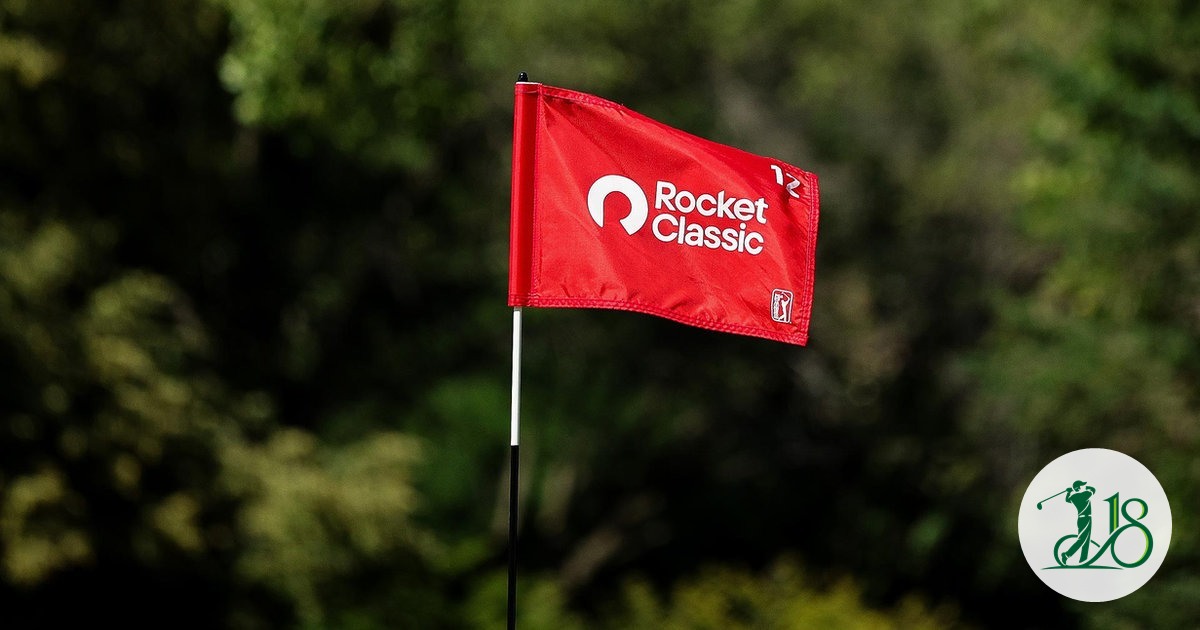
A final round with two scoreboards
Every Sunday on the PGA Tour creates an obvious accounting: the low score wins, the champion receives 500 FedExCup points and the purse is distributed. Detroit's final Sunday adds a second ledger. This is the eighth consecutive Rocket Classic at Detroit Golf Club and, according to local reporting, the last edition before the Tour moves the date to a replacement event in Napa in 2027.
That makes the tournament's meaning larger than whichever player holes the last putt. Detroit became the first city proper in Michigan to host a PGA Tour event when the tournament arrived in 2019. The event gave a national broadcast window to a Donald Ross course inside the city rather than a suburban resort, and it built its identity around Detroit instead of treating the city as a backdrop.
The champions gave Detroit a distinct history
The seven completed editions produced six different winners. Nate Lashley opened the list in 2019. Bryson DeChambeau followed in 2020, Cam Davis won in 2021 and 2024, Tony Finau took the 2022 title, Rickie Fowler won a playoff in 2023 and Aldrich Potgieter survived five extra holes in 2025.
That sequence matters because it avoided a single tournament type. Detroit rewarded established stars, a first-time winner, one of the Tour's longest hitters and a two-time champion. Low scoring became part of the event's identity, but the route to the trophy kept changing. The 2026 field arrived with ten major champions and 21 players ranked inside the world top 50, giving the closing edition enough competitive weight to stand on its own.
The community program is the harder legacy to replace
The official tournament site says the Rocket Classic has invested more than $10 million in local nonprofits since 2019. It assigns $6 million of that total to Changing the Course, an initiative created to expand access to high-speed internet, devices and digital training. The tournament lists Connect 313, Human-I-T, Black Tech Saturdays, Detroit PAL, Midnight Golf and First Tee of Greater Detroit among its beneficiaries.
Those figures deserve more attention than a generic claim that a sporting event "gave back." The program targeted a specific barrier, named its partner organizations and continued across multiple editions. A replacement Tour stop can reproduce a purse and television schedule. Reproducing a local network built over eight years is a different challenge.
Detroit Golf Club changed for the closing chapter
The club did not coast into the final edition. After the 2025 tournament, it began a $16 million North Course restoration led by architect Tyler Rae. The work rebuilt greens, modernized irrigation and addressed tees, bunkers and tree lines while returning attention to Donald Ross's original design principles.
The result creates an unusual ending: the Tour is leaving immediately after the host invested heavily in the course the tournament helped expose. That does not make the restoration wasted. Members retain the improved course, and Detroit Golf Club now owns a stronger platform for future championships. But it sharpens the question of what comes next.
What Sunday's finish can and cannot decide
The final round can produce a fitting champion. It cannot determine whether Detroit keeps a place on the PGA Tour calendar, whether another title sponsor emerges or whether the tournament's nonprofit partnerships continue at the same scale. Those outcomes require decisions beyond the ropes.
For viewers, the right way to watch is therefore double-focused. Follow the leaderboard because a Tour title matters. Also notice the course, the city presentation and the community infrastructure around the event. The Rocket Classic's final winner will be easy to record. The more important judgment is whether professional golf finds a way to preserve what Detroit spent eight years building.