
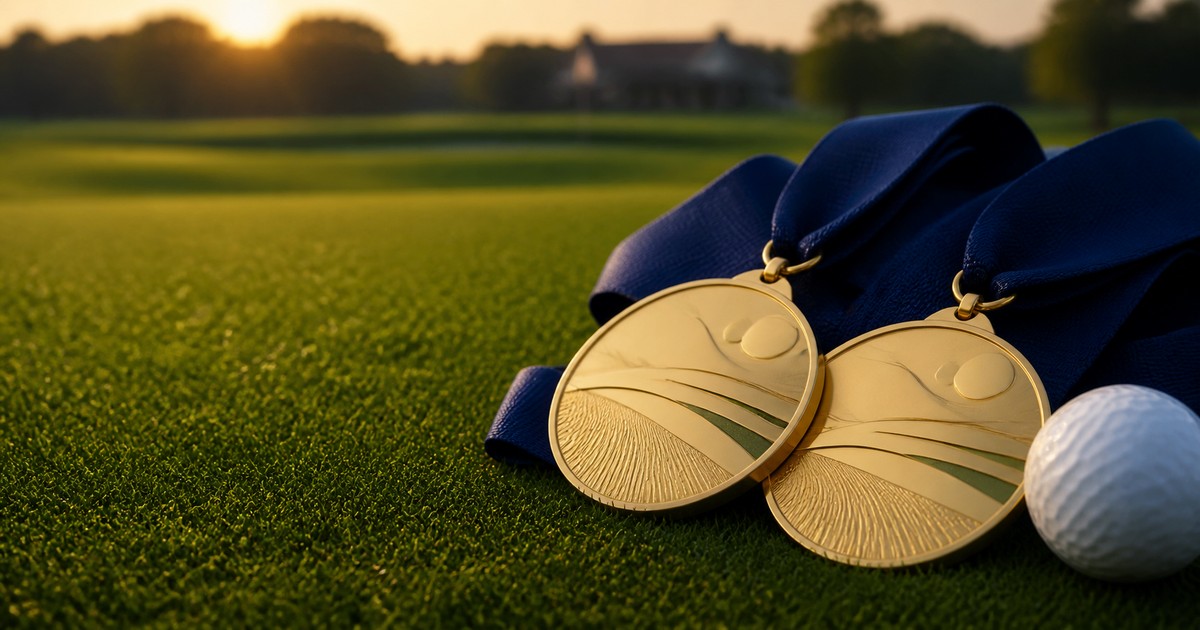
Quick answer: The winner of the 2026 U.S. Women's Amateur at The Honors Course will become the first recipient of the newly named JoAnne Carner Medal. The winner of the U.S. Amateur at Merion the following Sunday will receive the first Tiger Woods Medal. The USGA is keeping its historic championships and trophies while adding named medals that connect new champions directly to two unmatched amateur careers.
Two first presentations in eight days
The timing gives the policy unusual visibility. Match play at the 126th U.S. Women's Amateur reaches the quarterfinals and semifinals Saturday at The Honors Course in Ooltewah, Tennessee. Sunday's winner will complete a 36-hole championship match and receive the Robert Cox Trophy, the traditional symbol of the title, along with the first medal bearing JoAnne Carner's name.
On Monday, the 126th U.S. Amateur begins at Merion Golf Club outside Philadelphia. After two rounds of stroke play reduce the field to 64, six rounds of match play will determine a champion on August 16. That winner will lift the Havemeyer Trophy and receive the first Tiger Woods Medal.
The awards do not replace the championships' established trophies. They add a personal bridge between the player who wins now and the standard established by a historic champion. In consecutive weeks, the USGA is making that bridge visible in both of its flagship amateur championships.
Why JoAnne Carner defines the women's award
Carner won eight USGA championships, more than any other woman. Her résumé includes five U.S. Women's Amateur titles—1957, 1960, 1962, 1966 and 1968—plus the 1956 U.S. Girls' Junior and U.S. Women's Opens in 1971 and 1976. She is the only player to win the Girls' Junior, Women's Amateur and Women's Open.
Those victories matter because they span the entire path from junior golf through elite amateur competition to the national professional championship. Naming the Women's Amateur medal for Carner does more than honor longevity. It identifies the championship as a central stage of a complete competitive life.
The decision also arrives at a venue built around amateur golf. The USGA says Honors Course founder Jack Lupton created the club to pay tribute to amateur competitors. It has hosted the 1991 U.S. Amateur, the 1994 Curtis Cup, multiple NCAA championships and the 2005 U.S. Mid-Amateur. Awarding the first Carner Medal there fits the place as well as the player.
Why Tiger Woods defines the men's award
Woods' amateur sequence remains unique: three consecutive U.S. Junior Amateur titles from 1991 through 1993, followed immediately by three consecutive U.S. Amateur titles from 1994 through 1996. The six-year run created an uninterrupted match-play record that no player has duplicated.
His final U.S. Amateur victory is remembered for the comeback against Steve Scott at Pumpkin Ridge. Woods trailed by five holes during the 36-hole final before extending the match and winning on the 38th hole. The victory made him the first—and still only—player to win three straight U.S. Amateurs.
There is an additional link to this week's venue. Earlier in 1996, Woods won the NCAA individual championship at The Honors Course for Stanford. His four-round total was 285, and the victory was his last collegiate title before the third U.S. Amateur and his move into professional golf. Thirty years later, the same course is staging another national amateur championship as the medal policy begins.
A medal can tell a story a trophy cannot
The Robert Cox Trophy and Havemeyer Trophy carry institutional history. Their names reach back to the formative years of organized American golf, and preserving them maintains continuity across generations of champions. The new medals perform a different job: they put recognizable competitive examples beside those traditions.
That distinction is useful for younger audiences. A champion's name on a medal invites a straightforward question—why this player? The answer opens the record book. Carner's five Women's Amateurs lead to her eight USGA titles and her wins at every level. Woods' medal leads to six consecutive junior and amateur titles, 18 straight U.S. Amateur match victories and the foundation of a professional career that changed the sport.
The format makes those examples especially relevant. Stroke-play greatness rewards sustained scoring over a field. Match play asks a player to survive changing opponents, momentum swings and the possibility that excellent golf can still lose to something better. Carner and Woods did not merely win one match-play week; each returned and won repeatedly.
The naming choice also corrects an imbalance
Golf frequently preserves founders, donors and administrators in trophy names while the competitors themselves become part of a separate historical record. The USGA's medal decisions bring athletic achievement onto the object handed to the winner without discarding the older trophies.
Pairing the Carner and Woods announcements is important. The women's and men's champions receive parallel recognition rooted in the strongest relevant records, rather than treating one championship's history as an extension of the other. Carner's medal is not a companion honor defined by Woods; it stands on her unmatched eight-title USGA record.
The USGA has taken the same approach with the U.S. Junior Amateur trophy, which is also named for Woods. That award was presented under its new name for the first time in July. This month's two medals extend the idea into the oldest individual championships the association conducts.
What the first recipients will represent
The inaugural recipients will occupy a small but permanent place in championship history. Future winners may accumulate larger careers, and some may turn professional almost immediately. But only the 2026 champions can be the first names recorded beside the Carner and Woods medals.
That should not add a separate burden to the golf itself. Nobody advances in match play by trying to imitate a legend. The practical route remains immediate: control the next hole, recover when momentum shifts and survive enough matches to reach a 36-hole final. The symbolism becomes real only after the competitive work is finished.
This weekend, attention belongs to the players still navigating The Honors Course. Next week, it moves to Merion. The new medals succeed if they do not overshadow those competitors but give their victories a longer frame—one that says amateur championships are not preliminary events. For Carner and Woods, they were the place where greatness was already fully visible.