Quick answer: Callaway announced Thursday that it has ended its relationship with Good Good effective immediately following the backlash to their deleted driver advertisement. Callaway also said it completed its review, took internal corrective action, strengthened content-approval procedures and committed $1 million to organizations working to prevent violence against women, support survivors and advance education. Good Good did not immediately respond to Front Office Sports' request for comment.
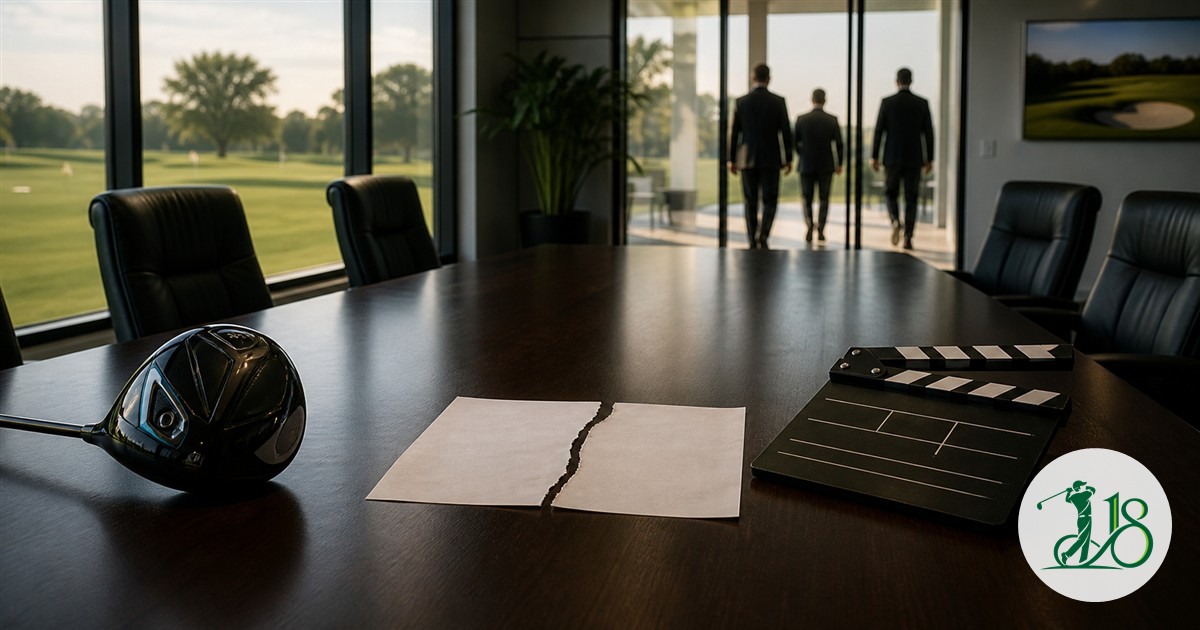
Callaway's response to the Good Good advertising crisis is no longer an apology campaign. It is a business separation.
The equipment company announced Thursday that it ended its relationship with Good Good "effective immediately," closing a partnership that began in 2023 and grew across equipment, content and co-branded products. The decision followed nearly a week of escalating criticism over a deleted driver advertisement depicting Good Good co-founder Garrett Clark shoving creator Alexis Miestowski to the ground as she reached for the club.
Callaway's new statement matters because it converts promises of review into three concrete actions: termination, internal process changes and a $1 million financial commitment. It also leaves a major unanswered question outside Callaway's control: what the PGA Tour will do about November's Good Good Championship.
Callaway accepted responsibility, then ended the deal
The first responses from the two companies did not settle the controversy. Good Good removed the video and apologized. Callaway initially said it was disappointed by the content, language that appeared to place the creative decision elsewhere.
CEO Chip Brewer changed that framing Tuesday. He acknowledged that Good Good produced the video but Callaway approved it before publication. He said the approval should never have happened and promised internal and external reviews.
Thursday's statement reports the result. Callaway said its content-review process "was not comprehensive enough," that it took appropriate internal corrective actions and that approval procedures were significantly strengthened. The company did not publicly identify the employees affected or describe the precise procedural changes.
That limit should remain clear. Callaway has disclosed the categories of action, not a complete internal report. The confirmed outcome is still substantial: it has removed the partner connected to the campaign and admitted its own gatekeeping failed.
Callaway has ended its relationship with Good Good, effective immediately.
— Callaway Golf (@CallawayGolf) August 27, 2026
The $1 million commitment changes the scale of the response
Callaway committed $1 million to organizations that prevent violence against women, provide resources to survivors and advance education and awareness. The company did not name recipients or a payment schedule in the statement available Thursday.
That distinction matters. A commitment is meaningful, but its impact will depend on which organizations receive funding, when the money moves and whether Callaway reports the results. Those details should be judged when the company supplies them rather than assumed now.
The commitment also demonstrates how far the consequences traveled from a 15-second social video. Callaway is not treating the episode merely as a failed product launch. Its statement says the content caused harm, apologizes for the company's role and makes prevention work part of its response.
For golf brands, the lesson is direct. Creator partnerships can produce enormous reach, but shared distribution also creates shared responsibility. A brand cannot approve material, benefit from its audience and then separate itself from the creative judgment when the campaign fails.
Good Good loses more than an equipment sponsor
The Callaway relationship helped validate Good Good's evolution from a YouTube group into a broad golf business. It included equipment access, product collaborations and the authority that comes from association with one of the sport's largest manufacturers.
Ending that relationship affects products already marketed around the partnership and future content that depended on Callaway equipment. The exact financial terms are private, so estimates of the loss would be speculation. The strategic loss is visible without inventing a number.
Other consequences had already accumulated. Golf Channel postponed the premiere of Big Break x Good Good after a sponsor requested removal of its branding. The Guardian reported that Dick's Sporting Goods and Golf Galaxy removed Good Good merchandise from stores and online. Clark issued a personal video apology Wednesday, describing his role and condemning abuse directed at Miestowski.
Those developments do not make every rumor credible. Retail availability, sponsorship status and program schedules should be verified separately. What Callaway confirmed Thursday is the central break: its partnership is over now.
The PGA Tour decision is still unresolved
Good Good is scheduled to serve as title sponsor of the Good Good Championship at Omni Barton Creek in Austin from November 9-15. The PGA Tour announced that agreement in October 2025 as part of its FedExCup Fall schedule.
At the Tour Championship this week, PGA Tour CEO Brian Rolapp called the situation fluid. He said the original ad was not aligned with Tour values and described Good Good's initial response as disappointing. The Tour has not announced a change to the November tournament's name or sponsorship.
Callaway's exit raises the pressure, but it does not decide the Tour's contract. The Tour must assess its own agreement, event operations, commercial replacements and the credibility of Good Good's response. Until it issues a statement, headlines claiming the tournament has already lost its sponsor would go beyond the facts.
This is also why Thursday's news clears the threshold for a separate update despite earlier Infinite18 coverage. Tuesday's story concerned Callaway's investigation and admission that it approved the ad. Today's story supplies the result: an immediate termination, corrective action and a seven-figure commitment. Those are new consequences, not a recycled controversy.
What accountability looks like from here
Callaway has now done the things its earlier statements left open. It accepted ownership of the approval, completed a review, changed procedures, ended the commercial relationship and attached money to the response.
The next test is follow-through. The company can identify the organizations receiving the $1 million, explain how its approval system changed without violating employee privacy and demonstrate that the new controls apply to future creator campaigns. Good Good can clarify how the split affects products, staff and its Tour event, while showing that its own review produced structural change.
The PGA Tour's choice may become the most visible judgment. If the Good Good Championship remains, the Tour will need to explain why. If the sponsorship changes, it will need to manage an event only months from its scheduled debut.
One conclusion is already settled. The deleted ad did not disappear when the post came down. It moved through apologies, retailer action, television disruption and now the end of one of creator golf's largest equipment partnerships. Callaway's Thursday statement is the clearest consequence yet.