
Quick answer: The BMW PGA Championship is sending players from the first and ninth tees in the opening two rounds for the first time in tournament history. The split start allows a 144-player field to begin between 7:00 a.m. and 2:05 p.m. local time, reducing the danger that late groups cannot finish before darkness at Wentworth in mid-September.
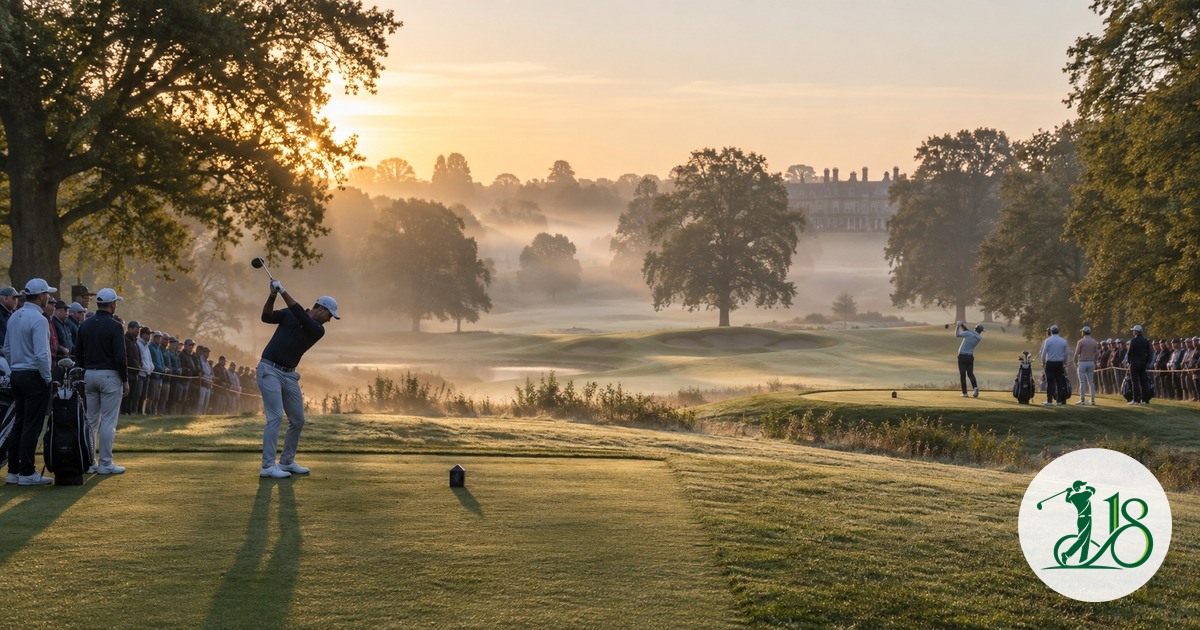
The first shot of the BMW PGA Championship no longer has one address. When Wentworth opened Thursday morning, players began from both the first tee and the ninth tee, breaking a tradition that had defined the DP World Tour flagship's early rounds.
Split-tee starts are routine across professional golf. They are not routine here. Wentworth has typically sent the entire field from the first hole, preserving a ceremonial flow in which every player begins beside the clubhouse and follows the same route through the West Course.
The 2026 field made that tradition difficult to defend. With 144 players, groups of three and September daylight, the tournament needed more usable minutes than a single tee could reliably provide. The answer is operational rather than theatrical: two groups start at the same time, one on each side of the course.
The daylight calculation forced the change
The official schedule lists first-round starting times from 7:00 a.m. to 2:05 p.m. local time. Even with two tees, that is more than seven hours of launches before the last groups begin. A professional round can take close to five hours, especially with thick rough, large galleries and a 144-player field moving through a demanding course.
Wentworth's move from May to September in 2019 created the underlying problem. The championship gained a valuable place in the calendar, but surrendered longer spring evenings. By mid-September, daylight around Surrey is already shrinking quickly. A fog delay, slow-play problem or weather stoppage can erase the margin.
Starting from two holes does not guarantee a clean finish. It does, however, place the final groups on the course earlier and gives officials more flexibility before darkness becomes decisive.
Why the ninth tee, not the tenth?
Most split-start tournaments use the first and tenth tees because that divides an 18-hole course into two conventional nines. Wentworth's West Course creates a different solution. The 2026 draw sends the second wave from the ninth hole.
That routing reflects the physical and logistical character of the property. Tournament operations must consider practice facilities, spectator movement, television positions, shuttle routes and the location of scoring areas—not merely the number printed on a tee marker.
A player beginning at nine completes holes nine through 18, then moves to the first tee for holes one through eight. The scorecard remains 18 holes; only the order changes. Officials can then pair the two starting streams so both sides of the course stay occupied without creating an avoidable traffic jam.
The competitive effects are subtle but real
A split start is designed for scheduling, yet it changes how a round feels. Players starting at the first hole enter the West Course through its familiar opening sequence. Those starting at nine are pushed toward the famous closing stretch much earlier, before turning to the front side.
That matters because Wentworth's final two holes are among its most recognizable scoring opportunities. A player beginning on nine reaches them during the first half of the round, potentially using fresh greens and calmer morning conditions. A first-tee starter reaches them in the traditional closing position, with the round's momentum already established.
Weather can deepen the difference. Morning mist, wind direction and green firmness do not affect each section identically. Over two rounds, the draw reverses starting sides and time windows, which is intended to balance those variables. It cannot make the experience identical.
The DP World Tour's look inside Wentworth shows the scale of the site and the operational demands surrounding its flagship championship. Video: DP World Tour on YouTube.
Television and spectators also benefit
The DP World Tour is offering featured-group coverage before its full world feed begins. A split start puts meaningful golf on more parts of the course early, giving production crews simultaneous choices and allowing featured players to complete rounds within the planned broadcast window.
For spectators, the effect is mixed. Fans accustomed to watching every star begin from the first tee must now check the draw and choose a starting point. In return, crowds can find active golf across more of the property sooner, and late-day spectators have a better chance of seeing every scheduled group complete play.
The tournament's official Thursday plan keeps the grounds open from 6:30 a.m. to 8:00 p.m. and starts competition at 7:00. Those hours show how much activity must fit into one day. The tee sheet is the mechanism that makes the public schedule possible.
A 144-player flagship has little room for nostalgia
Wentworth's stature makes the change noticeable. The championship wants the ceremony of a single opening tee, especially with a field containing Rory McIlroy, Jon Rahm, Tommy Fleetwood, Shane Lowry and the majority of Europe's latest Ryder Cup team.
But the same star power increases the operational load. Marquee groups attract large moving galleries. Every crossing point becomes slower, and every ruling can produce a delay that travels backward through the tee sheet.
The field size also distinguishes the BMW PGA from limited-field events. A broad flagship championship gives more DP World Tour members access to its purse, ranking points and stage. Preserving that opportunity requires a format capable of moving 144 players around the property.
What to watch over the first two rounds
The success test is simple: do the final groups finish on Thursday and Friday without darkness suspending play? If they do, the split start will have solved the problem that prompted it, even if most viewers barely notice.
Officials will also study pace on the handoff between the two starting loops. Any congestion near the turn could erase some of the time gained by launching from two tees. Player feedback will matter, particularly from those who feel the ninth-hole start creates an awkward competitive rhythm.
The weekend returns to a smaller field after the cut, removing the need for the same volume. That means the experiment is concentrated where it matters most: two crowded days, a famous property and limited autumn light.
The practical choice may become permanent
Traditions usually survive because they work. When conditions change, the strongest traditions adapt without losing their identity. Wentworth is still Wentworth. Every player still faces the same 18 holes, the same closing risk and the same championship stakes.
What has changed is the route into the round. Two simultaneous starting points give the tournament a better chance to keep its full field, television plan and spectator experience on schedule.
If the opening rounds finish cleanly, the first split-tee start in BMW PGA Championship history may quickly stop feeling historic. It will simply look like the practical way to run a flagship tournament in September.