
Quick answer: The PGA Tour's 120-player Butterfield Bermuda Championship field will compete October 22-25 at Port Royal Golf Course for a $6 million purse, a $1.08 million winner's share and 500 FedExCup points. Defending champion Adam Schenk is joined by four other past champions as players continue the race to finish inside the top 100 and secure full PGA Tour status for 2027.
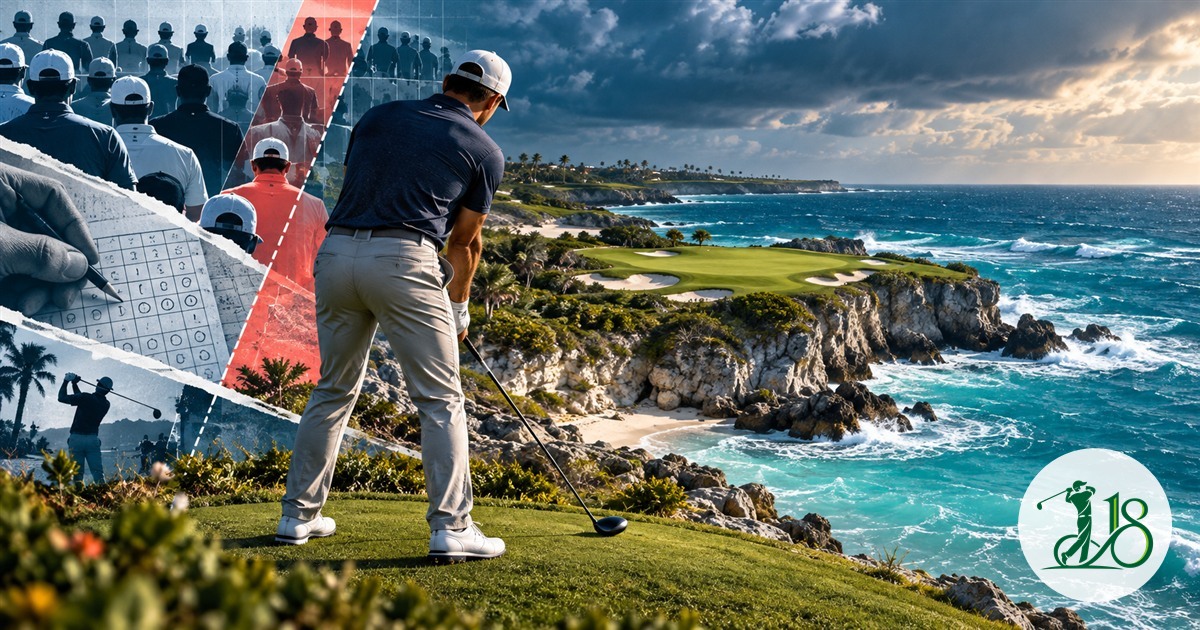
The PGA Tour's newest field list does more than fill 120 names into a bracket. It identifies who will take the next swing in a fall season built around employment. Bermuda is the fourth of eight FedExCup Fall tournaments, and the Tour has explicitly tied the series to eligibility for 2027. With half of the fall still to come, Port Royal is the point where patience begins to look dangerous.
Adam Schenk returns as defending champion after earning his first PGA Tour victory here in 2025. He is one of five former Bermuda winners in the field, along with Brendon Todd, Seamus Power, Camilo Villegas and Rafael Campos. Their presence supplies course history, but the deeper story is opportunity: the list also includes established winners, rising players and golfers whose priority for next season remains unsettled.
The numbers make Bermuda a leverage week
The official field announcement confirms a $6 million purse, $1.08 million to the winner and 500 FedExCup points. Those figures give Bermuda the same points award as a regular-season PGA Tour victory. In a fall race where the top 100 retain full status, a win can move a player past the entire argument about incremental gains and directly into a protected position.
The value is not limited to first place. A top-five or top-10 finish can create separation before the schedule moves to Mexico. Players below the line need large point weeks; players near it need to avoid being passed; players already safe can improve priority and enter 2027 with better access. The same leaderboard therefore measures several different kinds of pressure at once.
This is also the first event in a three-tournament international stretch. After Bermuda, the Tour goes to the VidantaWorld Mexico Open and the World Wide Technology Championship. Travel, unfamiliar grasses and changing weather make the sequence a competitive block rather than three isolated starts. A player who leaves Port Royal still chasing may have fewer comfortable places to solve the problem.
Highlights from the 2025 final round show how Port Royal's wind, exposed greens and closing pressure shaped Schenk's one-shot victory. Video: Golf Channel on YouTube.
Five champions show that Port Royal rewards different games
Todd, Power, Villegas, Campos and Schenk do not form one obvious player type. That is useful evidence about the venue. Port Royal is short by modern PGA Tour standards, but its elevation changes and Atlantic exposure prevent distance from becoming the only useful currency. Wind control, trajectory and the ability to accept conservative targets can matter more than overpowering the scorecard.
The 2025 broadcast described a course under 6,900 yards where elevation and wind create the real examination. That combination tends to widen the list of plausible contenders. A player who would be outgunned on a long, soft layout can compete by controlling contact and avoiding the wrong miss. Conversely, a powerful player who treats every hole as an invitation to attack can lose strokes quickly when a gust changes the landing area.
Schenk's return adds a clean benchmark. He beat Chandler Phillips by one stroke last year, so both the champion and runner-up arrive with evidence that their plans work here. Campos, Villegas, Power and Todd carry a different advantage: memory of how to close on an exposed course when every shot carries consequences beyond the trophy.
The field blends proven winners with urgent cases
Corey Conners, Lucas Glover, Chris Kirk, Denny McCarthy, Tom Hoge, Taylor Pendrith and Davis Thompson give the field established PGA Tour quality. Ben James, Neal Shipley and Ben Kohles headline the players emphasized in the Tour's announcement, while Joel Dahmen, Nick Dunlap, Aaron Wise and Cameron Champ add familiar names with reasons to make this week count.
The mix matters because Bermuda is not a protected, limited-field showcase. Conditional categories, reshuffles, open qualifiers and sponsor exemptions all feed into the 120-player list. The official field includes local or event-specific access beside fully exempt members. That creates a tournament where the same round can be a title defense for one player, a status fight for another and a first real PGA Tour opening for someone else.
Austin Lemieux is one example. The open qualifier earned his first PGA Tour start, according to Golf Channel's field report. His task is different from Schenk's but no less concrete: four rounds could create future starts, points and a professional reference point that did not exist before qualifying. Bermuda's full-field structure makes those stories possible.
Why the top-100 line changes Sunday decisions
Card pressure changes strategy most visibly near the cut and late on Sunday. A golfer safely inside the top 100 may protect a solid finish when the wind rises. Someone outside it may need to accept more variance, aim closer to a tucked flag or choose driver where a safer club would normally be sensible. The right decision depends not only on tournament position but on season position.
That does not mean every player should chase recklessly. Port Royal punishes emotional math. If the ocean wind makes a shot uncertain, the percentage play can preserve the chance to score on the next hole. The best status-race golf is usually aggressive in selected places and disciplined everywhere else. The standings raise the stakes; they do not repeal course management.
The top-100 format also makes the middle of the leaderboard unusually important. A tie for 22nd may not produce a highlight package, yet the points can determine whether a player enters the next week above or below the status line. Fans who follow only the lead will miss much of what the tournament is deciding.
What to watch when play begins Thursday
The opening round begins Thursday, October 22, with first- and tenth-tee starts scheduled for 7:30 a.m. Atlantic time. The tournament schedule lists live Golf Channel coverage from 2 to 5 p.m. Atlantic time each day, with the awards ceremony planned for 5:30 p.m. Sunday. Weather and tee times can change, so the official tournament schedule remains the authoritative viewing reference.
First, watch wind direction rather than raw scoring. A calm morning can make half the field appear dramatically stronger before afternoon conditions expose the course. Second, compare the five former champions: their club choices and misses should reveal which parts of Port Royal are playing differently from prior years.
Finally, follow the players around the status line even when television focuses elsewhere. Bermuda arrives at the exact point when a middling fall can still be rescued but no longer feels comfortably early. The official field announcement is the starting gun for that phase of the season.
No champion can be named on Monday, and no card will be secured by preview alone. What is already clear is the scale of the opportunity: 120 players, 500 points, $6 million and four days on a course where wind can erase a plan in one swing. Bermuda is not a holding week between larger events. It is one of the remaining places where a 2027 PGA Tour season can still be built.